
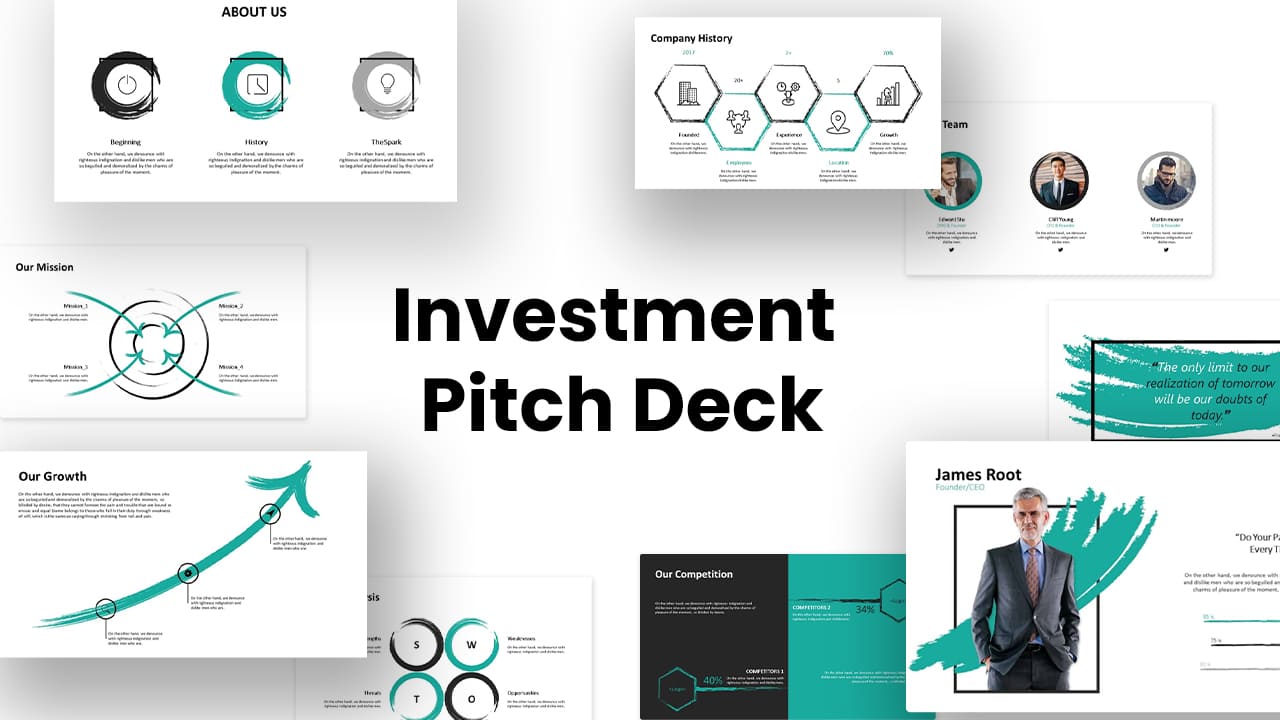

When it comes to raising capital, your pitch deck is often your first and most important impression. It’s the story that investors will see before they ever meet you in person—or decide if they want to. A great pitch deck has the power to open doors, attract funding, and set the tone for your startup’s future. But even the most promising ideas can be dismissed if the pitch deck contains critical mistakes.
Startups often pour time and energy into developing their products, but overlook the importance of how they present their business to potential investors. Here are the most common mistakes to avoid in your startup pitch deck, so you can stand out for all the right reasons.
1. Lack of a Clear Problem and Solution
One of the first slides in your deck should answer two key questions:
What problem are you solving, and how are you solving it?
Many startups make the mistake of diving into features or market data without clearly stating the real-world problem they aim to fix. If investors don’t understand the pain point or your unique solution, they won’t connect with your business idea.
Avoid:
- Vague problem statements
- Overly technical descriptions
- Assuming the investor knows your industry
Do instead:
- State the problem in relatable terms
- Clearly show how your solution works
- Use real-life examples if possible
2. Too Much Information
Your pitch deck is a teaser, not a full-blown business plan. A common mistake is cramming in too many details—excessive data, crowded slides, lengthy paragraphs, and technical jargon.
Investors often spend less than 4 minutes reviewing a pitch deck. Your slides need to be concise, visually appealing, and easy to skim.
Avoid:
- Wordy slides with small fonts
- Dozens of bullet points
- Unnecessary animations or clutter
Do instead:
- Use one idea per slide
- Leverage visuals, infographics, and charts
- Keep the overall deck under 15 slides
3. Ignoring the Market Size and Opportunity
Investors want to know that your business has the potential to scale. One of the most common omissions in pitch decks is a proper Total Addressable Market (TAM) analysis. Saying "everyone can use our product" is not a market analysis.
Avoid:
- Overestimating the market without proof
- Presenting unsupported projections
- Failing to segment your market
Do instead:
- Show the TAM, SAM, and SOM (Total, Serviceable, and Obtainable markets)
- Use credible sources and real data
- Explain how you’ll reach and capture your target market
4. Weak or No Business Model
Having a great product is important, but investors invest in business models, not just ideas. Failing to show how your startup will make money, or offering an unclear revenue strategy, is a red flag.
Avoid:
- “We’ll figure out monetization later” attitude
- Copy-pasting another company’s model
- Skipping financial details altogether
Do instead:
- Clearly explain your pricing strategy
- Highlight key revenue streams
- Include unit economics like CAC (Customer Acquisition Cost) and LTV (Lifetime Value)
5. No Go-to-Market Strategy
Many pitch decks talk about the product and market, but few address how you plan to get customers. This is a major mistake. A solid go-to-market strategy shows that you understand sales, marketing, and growth.
Avoid:
- Vague statements like “we’ll use social media”
- Ignoring distribution channels
- Skipping customer acquisition costs
Do instead:
- Outline your launch plan and sales channels
- Provide budget allocation for marketing
- Show early traction or partnerships if available
6. Overlooking the Team Slide
Investors often say, “We invest in people, not just ideas.” Your team slide is your chance to build credibility. Startups frequently make the mistake of putting generic bios or not highlighting why the team is uniquely suited for this business.
Avoid:
- Long resumes or irrelevant experiences
- Omitting key hires or advisors
- Not mentioning missing skill gaps
Do instead:
- Highlight relevant experience and achievements
- Show complementary skills in the founding team
- Include advisory board members or notable backers
7. Unrealistic Financial Projections
While investors expect ambition, they also value realism. Presenting overly optimistic numbers without justification can damage your credibility.
Avoid:
- Showing hockey-stick growth without logic
- Leaving out cost projections
- Not stating how funds will be used
Do instead:
- Include 3–5 years of financial forecasts
- Break down your burn rate, runway, and use of funds
- Be ready to back up assumptions with data
8. Weak Design and Formatting
First impressions matter. A poorly designed pitch deck—mismatched fonts, outdated templates, or inconsistent layouts—can distract from your message and reduce professionalism.
Avoid:
- Using default PowerPoint templates
- Inconsistent branding
- Lack of visual flow
Do instead:
- Use clean, modern templates
- Maintain consistent colors, fonts, and logos
- Use professional design tools or services
Final Thoughts
Your pitch deck is not just a presentation—it’s a story, a strategy, and a trust-building tool. Avoiding these common mistakes will help ensure your pitch deck stands out, communicates clearly, and inspires investor confidence.
Remember, you don’t get a second chance to make a first impression—especially when you're pitching your startup to potential investors.
How Innowork Global Can Help
Creating a compelling, well-designed, and data-backed pitch deck can be challenging. That’s where Innowork Global steps in.
Our team of Investment Bankers, Big 4 Accountants, and Strategic Consultants works closely with startups to develop investor-ready pitch decks that combine market insights, financial clarity, and storytelling impact.
We provide:
- Professionally crafted slide decks
- Realistic and data-driven financial modeling
- Go-to-market strategies and market sizing
- Visual design tailored to investor expectations
With years of experience supporting startups across sectors, Innowork Global helps you present your business with confidence and clarity.
Ready to build a pitch deck that gets results?
Partner with Innowork Global and make your startup investment-ready.